

How to Become a CT Technologist: Education, Certification, and Career Steps
If you’re wondering how to become a CT technologist, you’re probably asking more than just what classes to take or which certification you’ll need. You’re trying to understand what the career looks like, how long it takes to get there, and whether it’s the right next step for you.
The good news is there isn’t just one path into CT. Some technologists discover medical imaging while exploring healthcare careers, while others spend years working in radiography before deciding they’re ready to specialize. Both paths can lead to a CT tech career.
In this guide, we’ll walk through the education, certification, and career steps involved, explain how long it takes to become a CT technologist, and share what we’ve learned from working alongside imaging professionals as they grow their careers.
What Does a CT Technologist Do?
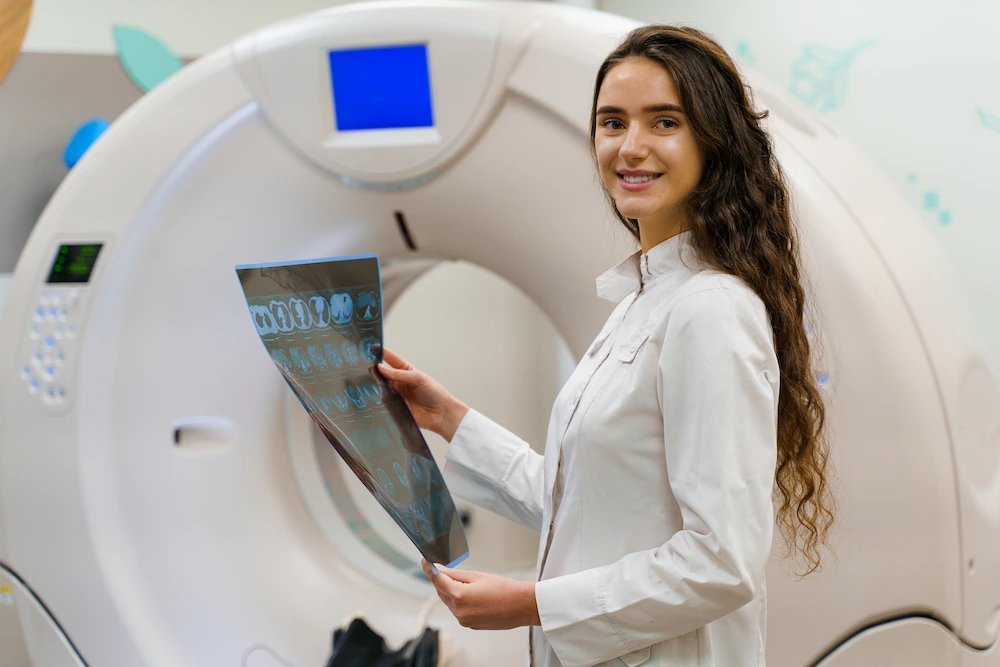
CT technologists operate specialized imaging equipment that creates detailed cross-sectional images to help physicians diagnose injuries, illnesses, and other medical conditions. While the technology is impressive, the role is about much more than producing clear images.
Every CT exam requires a combination of technical skill, patient communication, and clinical judgment. Whether you’re helping an anxious patient understand the procedure or working quickly during an emergency, you’re an important part of the allied health team.
A typical day may include responsibilities such as:
- Preparing patients for CT examinations and explaining what to expect.
- Positioning patients to capture high-quality diagnostic images.
- Operating CT scanners and evaluating image quality.
- Administering contrast media when appropriate and within your scope of practice.
- Following radiation safety protocols.
- Working closely with radiologists, nurses, and other healthcare professionals.
Two Common Paths to Becoming a CT Technologist
The first step in becoming a CT technologist is understanding where you’re starting.
Unlike some healthcare careers, there isn’t a single educational program that takes you directly from high school to becoming a certified CT technologist. In most cases, CT is considered an advanced imaging specialty that builds on the knowledge and clinical experience gained as a radiologic technologist.
That means your path depends on whether you’re just entering healthcare or you’ve already built a foundation in medical imaging.
CT Technologist Career Path 1: You’re Just Getting Started in Healthcare
If you’re exploring a career in medical imaging and don’t yet have experience as a rad tech, you’ll need to build that foundation first.
Most employers and credentialing organizations expect CT technologists to have the education, clinical training, and certification required to work as radiologic technologists before specializing in CT. That’s because the core skills you’ll develop — patient positioning, radiation safety, anatomy, image evaluation, and patient communication — are essential to performing CT exams safely and confidently.
This path is typically right for you if you:
- Haven’t completed a radiologic technology program.
- Don’t currently hold ARRT Radiography certification.
- Are researching careers in healthcare or medical imaging.
Your career path could look like this: Radiologic Technology Program → ARRT Radiography Certification → CT Education & Clinical Experience → ARRT CT Certification
CT Technologist Career Path 2: You’re Already a Radiologic Technologist
If you’re already working in diagnostic imaging, you’ve likely completed much of the foundational education needed to move into CT.
Instead of earning another degree, many radiologic technologists expand their skill set by completing CT-specific education, gaining hands-on clinical experience, and meeting the requirements for ARRT’s postprimary CT certification.
Your career experience allows you to build on the knowledge you already have rather than starting your education from the beginning.
This path is typically right for you if you:
- Currently work as a radiologic technologist.
- Hold ARRT Radiography certification (or are eligible for postprimary certification).
- Want to specialize in CT imaging.
Your career path could look like this: Radiologic Technologist → CT Education → Clinical Competencies → ARRT CT Certification
Many clinicians ask whether one pathway is better than the other. In our experience, that’s the wrong question. The better question is, Which path reflects where you are today? Once you understand your starting point, the next steps become much easier to plan.
How Long Does It Take to Become a CT Technologist?
If you’re wondering how long it takes to become a CT technologist, the answer depends almost entirely on where you’re beginning.
If You’re Starting from Scratch
Becoming a CT Technologist takes longer than if you have already worked in radiology.
Your journey generally includes:
- Completing an accredited radiologic technology program.
- Earning ARRT Radiography certification.
- Completing CT education and required clinical experience.
- Passing the ARRT CT certification exam.
Because you’re building your clinical foundation from the ground up, this pathway typically takes several years.
If You’re Already a Radiologic Technologist
Your timeline is often much shorter if you have experience in radiology because you’ve already completed your foundational education and certification.
Your focus shifts to:
- Completing CT-specific education.
- Gaining required clinical competencies.
- Preparing for and passing the CT certification exam.
Many techs complete this process while continuing to work, especially when employers offer opportunities for CT cross-training.
No matter which path you’re following, remember that everyone’s timeline is a little different. Your educational program, access to clinical experience, certification preparation, and workplace opportunities can all influence how quickly you progress.
Where Can Becoming a CT Technologist Take Your Career?
Many clinicians pursue CT because they enjoy the challenge of advanced imaging. Others appreciate the opportunity to expand their clinical knowledge or work with different patient populations.
As your experience grows, so do your career options. CT technologists can work in hospitals, trauma centers, outpatient imaging facilities, specialty clinics, and other healthcare settings.
For some clinicians, gaining CT experience also opens the door to travel healthcare. While travel assignments aren’t the right fit for everyone, many experienced CT technologists enjoy the opportunity to explore new facilities and build their careers in different parts of the country.
One thing we often tell clinicians is not to plan their entire career on day one. Focus on becoming an excellent CT technologist first. As your experience grows, new opportunities, including travel imaging, will naturally become available.
Take the Next Step Toward Travel CT Jobs With Lucid!
There isn’t one perfect roadmap to becoming a CT technologist because every clinician starts from a different place. Some begin by exploring careers in healthcare, while others discover a passion for CT after years of working in radiography.
Wherever you’re starting, your goal should be the same: build a strong clinical foundation, invest in your education, and continue developing your skills as an imaging professional. Those are the experiences that prepare you not only to earn your CT certification but also to build a career you’re proud of.
When you’re ready to explore what’s next, we’re here to help you evaluate your options and find opportunities that align with your goals!
Contact us at Lucid today to learn more about how we support clinicians on their journey to becoming travel techs!